

Charlie Grady has spent more than three decades working at the intersection of law enforcement, communication and community engagement. A retired law enforcement professional with more than 35 years of frontline experience, Grady has also been recognized for his work in media interaction training, using his background in theater, cinema and public service to help tell stories that move beyond headlines and stereotypes.
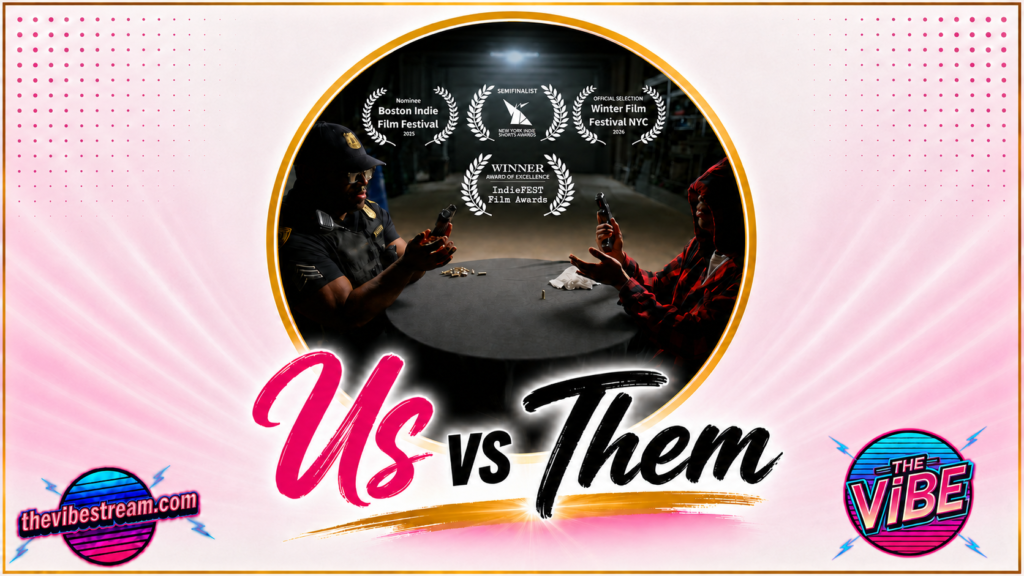
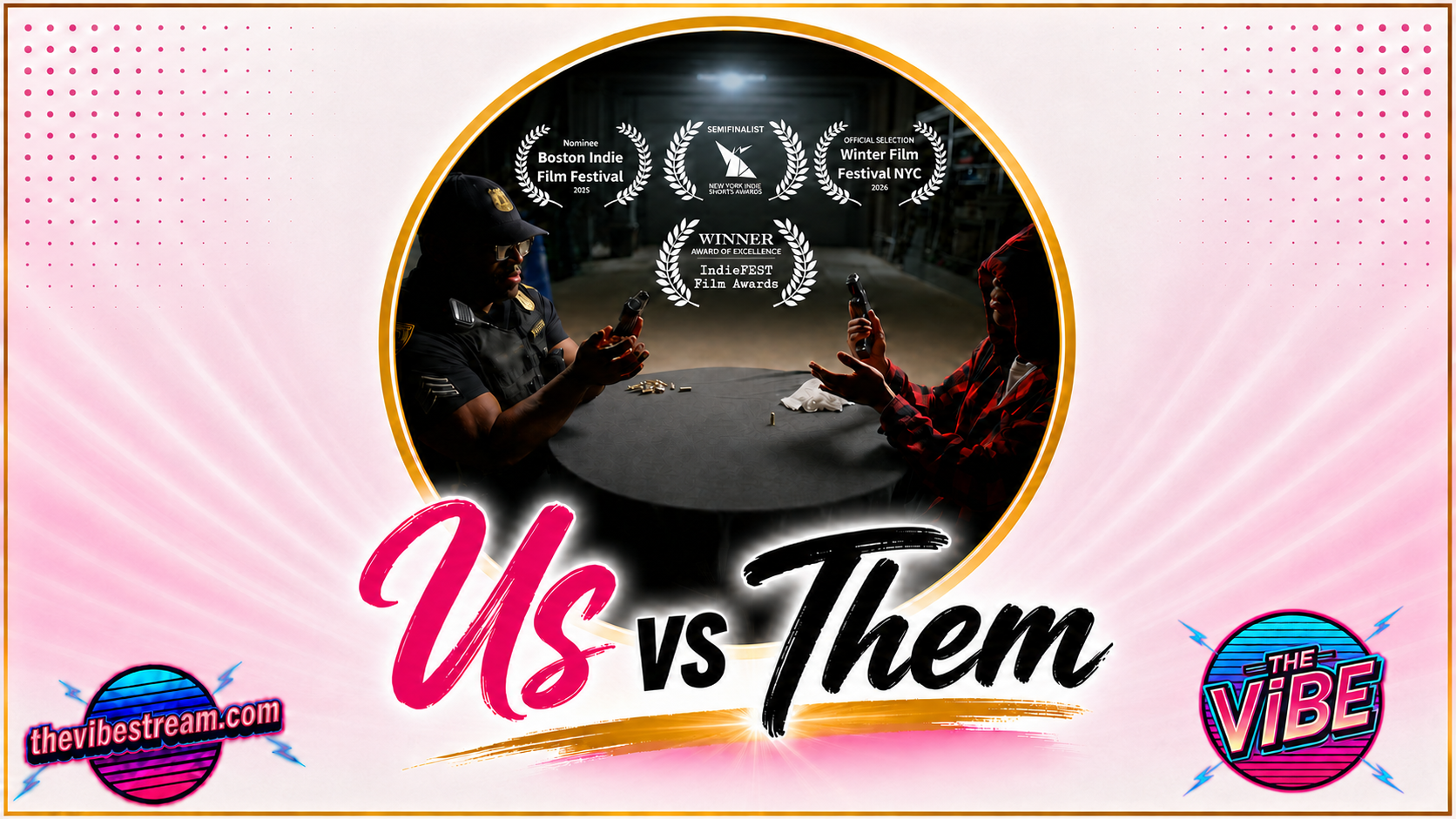
His short documentary, Us vs. Them, brought that experience to the screen.
Written and narrated by Grady, who also served as an executive producer, the film examined one of the most difficult conversations in America: the divide between law enforcement and the communities they serve. The documentary asked viewers to look past labels, assumptions and the “us versus them” mindset that too often shapes public conversations around policing, race, crime, accountability and redemption.
The film did not simply focus on conflict. It focused on humanity.
Through lived experiences from police officers, formerly incarcerated individuals, criminal justice experts and community voices, Us vs. Them explored what law enforcement is, what it has been, and what it could become when people are willing to listen to each other. Curry College described the film as a documentary that challenged perceptions of law enforcement while highlighting redemption and the need to break through stereotypes of “good guys” and “bad guys.”
Grady’s own story helped shape the heart of the project. His career has included decades of work in Connecticut communities, and his background has extended beyond traditional policing. According to the Winter Film Festival, Grady’s experience has included work as a motorcycle officer and FBI specialist, along with creative work in acting, playwriting, book writing and nonprofit leadership. That combination of law enforcement experience and storytelling gave Us vs. Them a personal and reflective tone.
The film has been screened in several educational and community spaces, including Curry College, Albertus Magnus College and UMass Lowell. At Albertus Magnus College, the film was presented as Us vs Them: with Charlie Grady, followed by a Q&A with Grady, who was listed as the film’s executive producer, writer and narrator. The screening included both a student program and a community screening.
At Curry College, the documentary was shown as part of the school’s Social Justice Series, bringing together students, faculty, staff and members of the local law enforcement community. The post-screening conversation included Grady and members of the cast, with discussion centered on how future law enforcement professionals could serve communities more fairly and effectively.
The film’s message also connected to a larger body of research around police-community relationships.
The U.S. Department of Justice’s Community Relations Service has stated that strong relationships of mutual trust between police agencies and the communities they serve are critical to public safety and effective policing. The agency notes that police rely on community cooperation to provide information about crime and work together on solutions, while community trust often depends on whether police actions reflect community values and principles of procedural justice.
Research has shown that positive, nonenforcement contact can make a difference. A field experiment involving community policing in New Haven found that a single positive interaction with a uniformed police officer could improve public attitudes toward police, including views of legitimacy and willingness to cooperate, with effects lasting up to 21 days.
At the same time, the research also shows that community policing is not a simple slogan or quick fix. The National Academies has noted that research findings on community policing and police legitimacy are mixed, and that programs are most meaningful when they involve real community engagement, accountability and public participation rather than symbolic outreach. Reviews have found that community-oriented policing does not always produce consistent crime-prevention results, but some programs can improve citizen satisfaction with police services.
That is where Us vs. Them found its purpose.
The documentary did not claim to solve the divide. Instead, it opened the door to a harder and more honest conversation. It asked audiences to consider how people are shaped by experience, how systems affect communities, and how change begins when people stop seeing each other only as sides.
For Grady, the film represented more than a documentary. It was a call to dialogue, empathy and transformation.
Us vs. Them reminded viewers that the future of public safety depends not only on policy, but on people — people willing to listen, reflect, take responsibility and build something stronger together.
Sponsored By: The Vibe
https://live365.com/station/The-Vibe-a35299